
Introduction
For decades, eye health in India has been a public health priority and a deeply human problem. In this landscape, Dera Sacha Sauda’s long-running eye care program stands out for scale, continuity, and community reach.
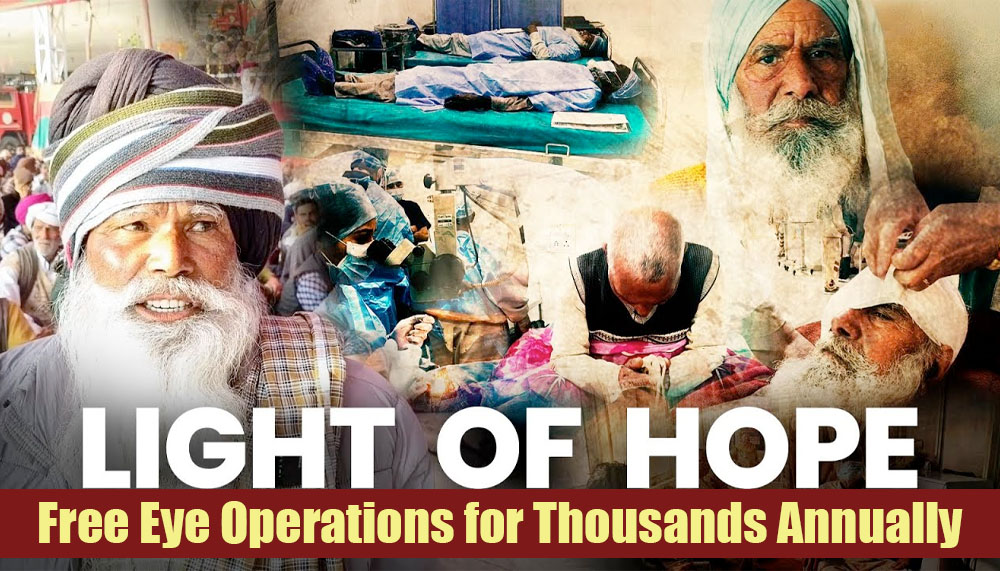
This year, the organization hosted the 34th Yaad-E-Murshid Free Eye Camp, a large-scale Free Eye Camp that continued the Dera’s practical work to remove financial, logistical, and social barriers that keep people from accessing sight-restoring treatment. The camp is a flagship moment in the wider Divine Light Initiative and Divine Light Campaign, efforts that combine eye donation outreach, free diagnostics, and Free Eye Operations in India so that low-income and rural patients can see again without the burden of medical costs.
Purpose of the 34th Yaad-E-Murshid Free Eye Camp ( Divine Light )
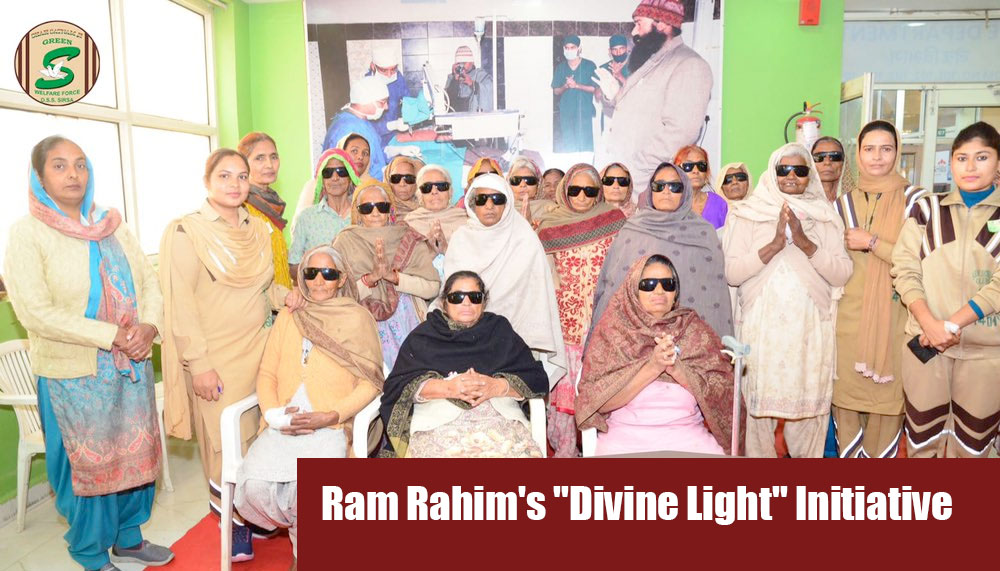
The 34th Yaad-E-Murshid Free Eye Camp was organized at Shah Satnam Shah Mastana Ji Dham, Dera Sacha Sauda, Sirsa, and ran from December 12 to December 15 this year. The camp continued a tradition of multi-day, fully supported eye screening and surgery drives designed to reach patients from remote and economically vulnerable communities. Registration opened ahead of the camp and on-site operations included systematic screening, diagnostics, advanced cataract surgeries, laser procedures, and comprehensive post-operative care — all provided at zero cost to the patient. These camps are carefully scheduled and staffed to ensure clinical safety and high throughput while retaining a patient-first approach that covers transportation, medicines, and recovery support.
Why this matters now: the continuing burden of avoidable vision loss in India
India has a long history of preventable and treatable visual impairment. While older national estimates once placed the number of blind people in India in the tens of millions, more recent and methodologically refined studies show a reduction in the prevalence of blindness as services expanded. Contemporary public health reviews estimate several million people still live with blindness in India, and tens of millions more have moderate to severe vision impairment that would benefit from timely care. The practical point is clear: a vast need remains, especially among older adults and in underserved regions, and camp-style outreach remains an efficient, proven way to reach patients who would otherwise go untreated.
How Dera Sacha Sauda’s Free Eye Checkup Camp is structured: screening to surgery to follow-up
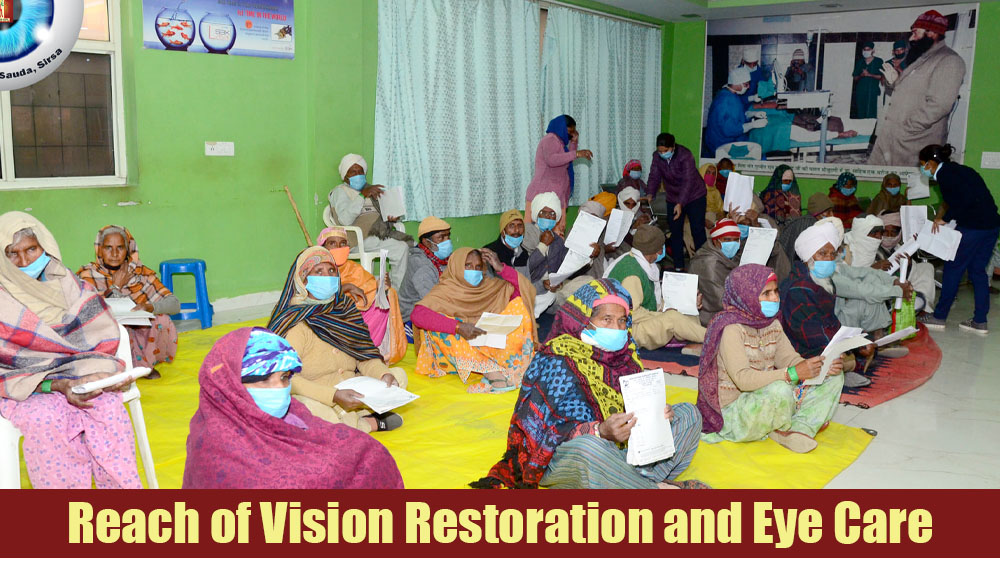
A Free Eye Camp of this scale is not improvisation. The 34th camp followed a tightly coordinated model that begins with community registration and pre-screening, triage by trained clinicians, full ophthalmic evaluation for those flagged for surgery, and a sequence of pre-operative investigations and counselling. Operation theaters at Shah Satnam Ji Speciality Hospital and affiliated facilities were used for procedural safety. Post-operative care is arranged before the patient leaves, including medicines, spectacles when needed, and follow-up visits. This end-to-end design reduces no-shows and ensures high-quality outcomes, which is crucial for sustaining trust with rural communities who might otherwise be wary of complex procedures. Dera Sacha Sauda
Numbers that show impact: what the 34th camp reports and why it scales
Dera Sacha Sauda’s eye care program has long kept cumulative metrics that track donated corneas, procedures, and patients served. The organization’s public communications around the 34th camp highlight multi-day screening figures, the number of free cataract surgeries performed during the event, and the steady role of volunteers and specialist surgeons that enable high surgical volumes.
These statistics matter for two reasons. First, they show the program’s ability to convert registrations into completed procedures safely. Second, they validate the broader Divine Light Campaign model where free outreach events operate hand in glove with an active eye bank that supplies corneal tissue and supports corneal transplants and related interventions. For this year’s 34th camp the official pages and social posts confirm the December 12–15 dates and emphasize partial daily tallies, staffing, and continued outreach.
The eye bank and donation work behind the scenes
A Free Eye Camp can only do so much without a reliable, quality-focused eye bank infrastructure. Pujniya Mata Kartar Kaur Ji International Eye Bank, housed at Shah Satnam Ji Speciality Hospital in Sirsa, is the logistical backbone that turns pledges into usable tissue and enables corneal transplant capacity beyond basic cataract care. Dera’s eye donation pages and recent reports attribute thousands of pledges and many thousands of processed donations to the eye bank over the years.
The eye bank also commits to modern preservation techniques and clinical governance that ensure donated corneas meet transplant standards. That investment in the eye bank is why the camp network does not just screen patients but can also refer and treat corneal and other specialized cases — a key difference between simple screening drives and a full service model for free eye operations in India.
Services offered during the 34th camp: what patients got for free
At the 34th Yaad-E-Murshid Free Eye Camp patients received a suite of services that go well beyond a quick check. Typical services included comprehensive eye examinations, cataract surgeries with lens implantation when required, YAG laser and green laser procedures for specific cases, corneal referrals when necessary, free spectacles where prescribed, free medicines for the immediate post-operative period, and structured follow-up to ensure recovery and monitor outcomes. The camp model intentionally integrates allied diagnostic services such as blood tests and systemic evaluations for surgical fitness, because safe surgery depends on more than eye-specific work. Patients were also provided counselling and post-op rehabilitation advice before discharge. This complete package reduces the hidden costs that often prevent people from accessing care. Divine Light
People who make it possible: Doctors, volunteers, and organizers
High-volume free eye programs require both experienced ophthalmologists and a disciplined volunteer base. In the 34th camp, teams included visiting and resident surgeons drawn from medical colleges and specialty hospitals, supported by anesthetists, nurses, technicians, pharmacists, and administrative volunteers. Social media and the Dera’s news updates note hundreds or thousands of volunteers across logistics, registration, transport, and patient care roles for multi-day camps. The volunteer workforce is often local and seasonal, enabling both clinical throughput and rapid, compassionate patient support. In practical terms that combination of experienced clinical teams and disciplined community volunteers is one reason these Free Eye Camps have sustained momentum for decades
Eye donation awareness tied to cultural moments: from weddings to birthdays
What sets Dera’s model apart is its blend of spiritual appeal and practical awareness-building. Over the years, followers and community members have been encouraged to pledge eyes during life events such as weddings, birthdays, and religious gatherings. These pledges have become a social instrument to normalize and destigmatize eye donation. The Dera’s public messaging frames eye donation as a final act of service that can literally give sight to others, and the resulting pledges feed the eye bank’s inventory. That strategy turns cultural moments into public health opportunities and is a central pillar of the wider Divine Light Initiative.
Understanding the Divine Light Initiative by Baba Ram Rahim
The Divine Light Initiative is more than a brand name. It is an organizing philosophy that connects spiritual messaging to measurable health outcomes. The Divine Light Campaign encapsulates outreach, volunteer mobilization, eye banking, and continuous patient care. It aims to reduce dependence on episodic charity by building recurring, quality-assured programs and a culture of donation. By combining awareness with clinical capacity, the campaign creates a sustainable pipeline from pledge to transplant to lifelong follow-up — a design that increases trust and clinical efficacy for Free Eye Operations in India.
Real-life stories: How Divine Light Initiative regained sight changes lives?
The human element of these camps is what makes the statistics meaningful. Restored vision restores livelihoods, dignity, and independence. A farmer who cannot see well may lose the ability to work with precision. An elderly person who cannot recognise family members loses daily companionship. Students who cannot read fall behind at school. The 34th camp, like prior editions, recorded hundreds and in some cases thousands of patients who regained functional vision, went home with new spectacles, or were scheduled for follow-up procedures that would restore reading ability and work capacity. Each successful case reverses years of accumulated disadvantage for the patient and their household. The tactical focus on high-volume, low-cost operations is therefore an investment in social and economic inclusion as much as in health.
Quality, safety, and clinical outcomes
Large camps must avoid the trade-off between volume and safety. Dera Sacha Sauda’s camps address this by using hospital-grade operating rooms for surgeries, ensuring pre-operative assessment teams follow standard protocols, employing trained anesthetic staff, and scheduling follow-up appointments. Clinical governance is maintained by partnering with experienced surgeons and by following a documented surgical protocol. The presence of Shah Satnam Ji Speciality Hospital and its affiliated facilities gives the camp access to post-operative inpatient care for patients who require additional monitoring. This emphasis on clinical standards is the reason these camps can deliver consistently high rates of surgical success and low complication rates. Baba Ram Rahim
Dera Sacha Sauda publishes cumulative data on donations and operations in its public material. Over the years, the organization reports tens of thousands of screenings and many thousands of surgeries carried out across successive Yaad-E-Murshid camps. The Pujniya Mata Kartar Kaur Ji International Eye Bank’s role in processing and making corneas available is central to that number-driven impact. Recent Dera pages and affiliated reports highlight the long-term totals for donations processed and corneal uses, and those figures underpin the scope of the campaign’s reach. For accurate, contextual figures and the latest counts, the Dera’s official pages and social posts list updated totals and camp tallies. Divine Light
Common myths about eye donation and how the Divine Light Campaign counters them
Misconceptions around disfigurement, religious barriers, and the usefulness of donated tissue remain roadblocks to donation. The campaign counters these myths through repeated education at community events, printed and digital information, and testimonials that show donations lead to real transplants and life-changing results. By framing donation as honorable and spiritually meaningful, the campaign shifts public perception and increases the number of donors who register their intent while still alive or who prompt families to donate after death. The combination of spiritual affirmation and clear medical facts is an effective way to build trust and acceptance around eye donation in India. Dera Sacha Sauda
How Dera Sacha Sauda’s Free Eye Checkup Camp in India models like this plug gaps in public health?
India’s health system provides many good services, but logistical and financial barriers still prevent equitable access to eye care in many regions. Free Eye Checkup Camps in India act as access accelerators. They reduce time and money costs, pair screening with on-the-spot counselling, and create immediate referral pathways to hospital-grade procedures. When organized with a local eye bank and hospital network, they also allow for complex care such as corneal transplants and specialized interventions that one-off camps cannot accomplish. That is the model Dera Sacha Sauda follows: screening events that link directly to a working clinical and donation ecosystem, increasing the likelihood that a screening leads to a life-improving operation
Participation is easy and has multiple entry points. People can pledge to be eye donors using the Dera’s pledge forms, volunteer during camps, or simply share verified information about upcoming Free Eye Camps and Eye Checkup Camp in India events with neighbors and family members. Health professionals can partner as visiting clinicians. Corporates can support logistics and funding for outreach in remote areas. Even a single share or a pledge can become the difference between someone remaining blind and someone seeing again. The Divine Light Campaign’s consistent call is for simple, actionable steps that collectively drive systemic change.
Looking forward: sustainability, scale, and the path to fewer preventable cases
The longer-term goal is to reduce preventable blindness across India by scaling eye bank capacity, integrating routine screening into primary care, and normalizing donation culturally. Initiatives like the Divine Light Initiative help by providing an operational blueprint: combine yearly large camps with continuous donation drives and hospital partnerships. Over time, the model increases the proportion of treatable blindness that is actually treated, reducing socioeconomic burdens on families and communities. If replicated with local adaptation across other regions, similar campaigns can accelerate India’s progress toward significantly lower prevalence of avoidable blindness
The 34th Yaad-E-Murshid Free Eye Camp ( Divine Light ) is not merely a medical event. It is a demonstration of the value of marrying social mobilization, hospital-level clinical standards, and an effective eye bank infrastructure. By doing so, the camp expands access to Free Eye Operations in India, normalizes eye donation through the Divine Light Campaign, and offers an efficient public health response to a still-large burden of avoidable vision loss. Each restored vision after the 34th camp is a practical outcome and a social statement: that large, well-run free eye programs can be safe, effective, and transformative when they are built on community trust and clinical competence.