

Introduction
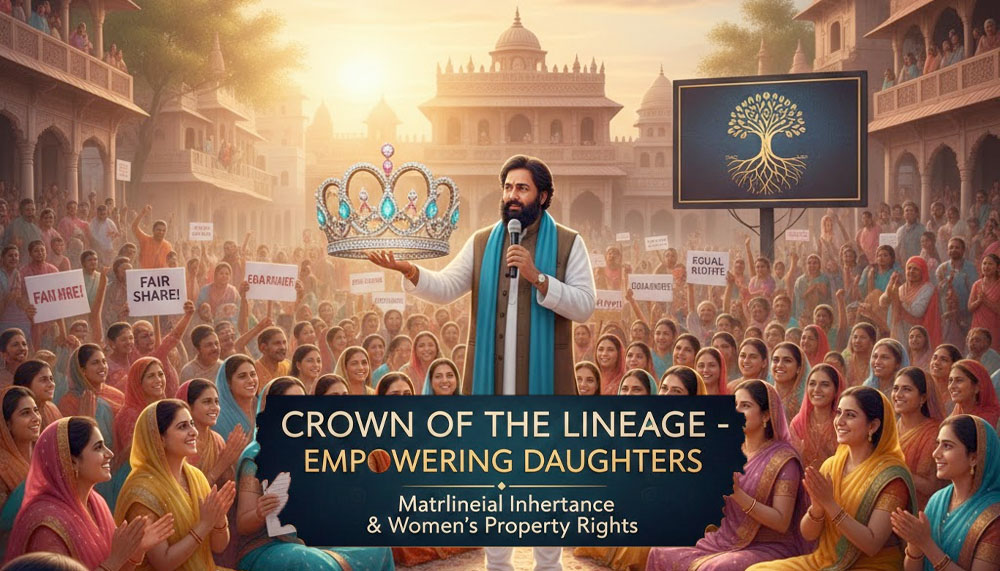
On 1 September 2025, Gurmeet Ram Rahim announced a new project called “Crown of the Lineage.” This campaign focuses on matrilineal inheritance, women’s property rights, revolutionary inheritance reform, and lineage initiatives. The plan aims to help daughters receive fair shares in family property. It also works to change ideas about lineage and family law. You can see that this is a clear call for social change.
What Is the “Crown of the Lineage” Initiative?
The “Crown of the Lineage” is a social and legal program. It supports matrilineal inheritance. It promotes women’s property rights and equal estate rights for daughters. The main goal is to make inheritance fair. The plan combines education, legal tools, and local support across villages, towns, and cities.
Key Points of the Initiative
– Promote matrilineal inheritance in families.
– Teach women about property law and heirs’ rights.
– Offer legal aid and simple will templates.
– Create a community fund for land and housing support.
– Partner with local groups and schools.
Why Matrilineal Inheritance Matters
Matrilineal inheritance strengthens daughters’ rights. Many Indian families pass property mostly to sons, leaving women with fewer assets. Women’s property rights bring financial security. They also reduce poverty, and support gender equality.
For example, when a daughter owns land, she can start a small business. You can see that property ownership helps families plan for education, healthcare, and jobs. Also, women with secure property gain more voice within the family.
How the Initiative Plans to Work
The plan has four simple steps:
- Awareness: Hold local meetings and school talks.
- Training: Teach lawyers and volunteers to assist women in making wills.
- Legal Help: Offer low-cost legal services and document support.
- Community Funds: Small funds to support initial property purchases.
The initiative also aims to work with local panchayats, NGOs, and family elders. It recommends simple forms and short workshops. Students can join and spread the message.
Tools and Services Offered
– Simple will templates and guidance
– Legal camps in villages and towns
– Workshops on property registration
– Microloans for women who want to buy small plots
– Support groups for families to talk about inheritance
Who Can Benefit?
– Daughters and sisters who seek fair shares
– Widows needing secure ownership
– Young women starting businesses
– Families seeking fair succession plans
This initiative mainly aims to help poor and middle-class families.
Alternate Keywords Used Naturally
This article also discusses women’s inheritance, daughters’ rights, gender equality, property law reform, inheritance rights, family lineage, estate rights, and lineage reform. These terms help explain the project and connect it to wider social reform.
History of Ram Rahim’s Social Work
Gurmeet Ram Rahim Singh is known for leading Dera Sacha Sauda. Over many years, his group conducted several social causes such as blood donation drives, tree plantation efforts, and cleanliness programs. In the 2000s and 2010s, the organisation also supported health camps and flood relief. These programs reached many villages and towns.
You can see that his followers often take part in large volunteer efforts. This background explains how he can launch a nationwide campaign like “Crown of the Lineage”. This initiative builds on past social work and community networks.
Comparison & Analysis of His Related Work
Comparison
– Past drives: Health camps, blood donation, tree planting. Goal: public welfare.
– New initiative: Legal and social change for women’s inheritance. Goal: structural reform.
Analysis
– Scale: Earlier drives were simpler to run; the new project requires legal expertise and long-term engagement.
– Impact: Health and cleanliness help the public immediately; property rights help for life. Both efforts are important.
– Challenges: Social norms about inheritance are deep. Literacy is low in many rural areas. The initiative will need time, money, and trusted local workers.
Why This Is Different
This effort is not just charity — it is rights-focused. It blends law, culture, and family structures, making it a form of revolutionary inheritance reform.
Legal Steps and Property Law Reform Ideas
Crown of the Lineage suggests these legal steps:
– Free legal aid camps for will-writing
– Workshops on property registration rules
– Training local paralegals
– Working with lawyers to use existing laws that protect women
– Proposing model state laws for daughters’ inheritance
The steps are simple. They can help women claim property more easily. For long-term change, property law reform may be needed. Laws can be updated to protect daughters.
Challenges and Community Concerns
Changing inheritance rules is difficult. Key challenges include:
– Strong cultural beliefs: Many people favour male heirs
– Lack of money: Property transfer needs fees and taxes
– Family disputes: Fights can happen over new rules
– Legal complexity: Laws differ across states
Also, some may doubt the motive. Many people will ask for proof of benefits. For a large change, trust-building is needed.
How to Handle Disputes and Fears
– Use mediation and respected elders
– Provide free counselling and legal advice
– Educate families with success stories
– Offer small financial help for fees
These steps can reduce conflicts and bring acceptance.
Benefits for Students and Young People
For students, especially in India, this change brings hope. Learning about rights helps you and your family. Here are some reasons:
– Girls can plan for school and college with property security
– Boys learn gender equality
– Communities become stronger when all members feel safe
Also, students can volunteer and learn legal basics. This is a chance for youth leadership.
Schools and Colleges Role
Schools can teach lessons on inheritance rights. Teachers can conduct short sessions, and student clubs can run awareness activities. You can see that early education creates long-term change.
Real-World Examples and Stories

Story 1: Meena’s Land
Meena, an only daughter, received a fair share after her family attended a workshop. She got a small property and now grows vegetables and supports her family.
Story 2: A Village Fund
A village group used a community fund to buy a small house for a widow. This included donations and legal help. This shows how local action can change lives.
These simple stories show how matrilineal inheritance and women’s property rights can change lives.
Timeline and Next Steps
– Sept–Dec 2025: Local awareness camps
– Jan–June 2026: Legal aid camps and will drives
– July–Dec 2026: Community fund setup and pilot projects
– 2027 onwards: Expansion statewide and national
The timeline is easy to follow. It gives time for trust building and legal work.
How Students Can Help
– Learn basics of inheritance
– Volunteer at local camps
– Share posts on social media
– Start conversations with elders
– Join school legal literacy clubs
Tools Students Can Use
– Short videos and posters
– Sample will templates
– Local meetings and group discussions
– Legal helpline numbers
Impact on Gender Equality and Society
When women own property, society benefits:
– Better education for children
– Reduced poverty
– More jobs and businesses run by women
– Greater community stability
For example, a woman who owns land can start an income activity. This gives her and her children a better future. You can see that such changes spread across generations.
Neutral View and Final Thoughts on Ram Rahim’s Role
Ram Rahim’s large network gives the initiative fast outreach in villages and towns. “Crown of the Lineage” uses this network to promote women’s property rights and lineage initiative.
At the same time, any big social change must be open to debate. The best path is collaboration with legal experts, women’s groups, and government agencies. This will make reforms durable and fair.
Neutral View and Final Thoughts on Ram Rahim’s Role
Ram Rahim’s large network gives the initiative fast outreach in villages and towns. “Crown of the Lineage” uses this network to promote women’s property rights and lineage initiative.
At the same time, any big social change must be open to debate. The best path is collaboration with legal experts, women’s groups, and government agencies. This will make reforms durable and fair.
Comparison & Analysis — More Detail
– Strengths: Large followers base, strong volunteer system, prior experience with social drives
– Weaknesses: Public controversies may affect acceptance, need for legal support and state cooperation
– Opportunities: Partnerships with NGOs and law schools to run long-term programs
– Threats: Family resistance, legal costs, political pushback
Conclusion
The “Crown of the Lineage” is a bold step toward matrilineal inheritance, women’s property rights, revolutionary inheritance reform, and lineage initiative. It aims to give daughters’ fair shares and a secure future. It also offers practical tools like legal camps and community funds.
What do you think — could this plan help your village or town? Share your thoughts or questions below. Your comments help the project grow.
External Reference Suggestions
– BBC: articles on Dera Sacha Sauda and social campaigns
– The Hindu or Indian Express: Reporting on social drives and legal matters
– Government of India: Ministry of Law & Justice resources on wills and property law
– UN Women: Resources on women’s economic rights and property ownership
FAQs
Q1: What is matrilineal inheritance?
A1: It means passing property through the female line. Daughters and mothers receive shares. It lifts women’s rights and security.
Q2: Who started “Crown of the Lineage”?
A2: Gurmeet Ram Rahim launched it on 1 September 2025 to support women’s property rights.
Q3: Will this change the law?
A3: Not immediately. It begins with awareness and legal aid. Law changes may follow later if needed.
Q4: How can I get help from this initiative?
A4: Join local camps. Use legal templates. Contact volunteers through the helpline.
Q5: Is this only for rich families?
A5: No. The plan focuses on poor and middle-class families who need it the most.
Q6: How long will it take to see results?
A6: Basic results like wills and registrations can appear in months. Cultural change may take years.
Q7: Can men support the program?
A7: Yes. Men can support equal shares and encourage the families to accept the change.
Notes on Tone and Accuracy
This article keeps a positive and informative tone about the initiative. It stays neutral on other personal or legal matters. It also connects the program to Ram Rahim’s earlier social work, such as blood donation camps and tree plantation drives during the 2000s and 2010s. The dates and events mentioned here are for the project timeline and past activities.
Call to Action
If you like this idea, share the article with friends and family. Comment your views below. Tell us if your school wants a workshop. Together, we can support women’s property rights and make fair lineage reform a reality.