
Tribal integration is one of the most significant challenges facing modern social development. For centuries, indigenous communities have lived in isolation, preserving their unique traditions but often missing out on the benefits of modern advancement. However, the bridge between these communities and mainstream society is fragile. Therefore, it requires patience, respect, and a dedicated workforce to build.
In recent years, various social initiatives have attempted to close this gap. One prominent example is the “Civilized Beings” campaign inspired by Baba Ram Rahim. This initiative focuses on the holistic betterment of humanity, including the welfare of those living in remote and tribal belts.
This comprehensive guide explores the complex landscape of tribal integration. We will examine how indigenous development works on the ground, the role of social inclusion, and how the methodologies used by Baba Ram Rahim and his volunteers provide a practical blueprint for community service.
Understanding the Core Concepts of Tribal Integration
Before diving into solutions, we must clearly define what we are trying to achieve. However, many people misunderstand integration as assimilation. For instance, they believe that for a tribe to join the modern world, they must give up their identity. This is incorrect.
Tribal integration is about access and choice. In other words, it means ensuring that a child born in a forest hamlet has the same access to vaccines, schools, and legal rights as a child born in a city. Moreover, it is about extending the safety net of the nation to its furthest corners.
Mainstream society refers to the dominant economic and political structures of a country. Therefore, when we talk about connecting tribes to this society, we mean giving them a voice in democracy and a stake in the economy.
Social inclusion is the result we strive for. It is a state where individuals feel valued and respected, regardless of their background or where they live.
The Philosophy Behind “Civilized Beings”
The concept of “Civilized Beings” goes beyond basic charity. Moreover, Gurmeet Ram Rahim Singh, the head of Dera Sacha Sauda, has long emphasized that a truly civilized person is one who helps others without expecting anything in return. Therefore, this philosophy acts as the engine for indigenous development in this context.
The organization has launched over 175 welfare activities. For example, these range from massive tree plantation drives to cleanliness campaigns. When applied to tribal areas, this philosophy shifts from general welfare to targeted aid. Furthermore, the volunteers, known as “sevadaars,” do not just donate money. Instead, they donate time and labor.
This human connection is vital. Indeed, Gurmeet Ram Rahim Singh has often stated that service to humanity is the highest form of worship. As a result, this motivation drives thousands of volunteers to travel to difficult terrains where government machinery sometimes struggles to reach.
Why Tribal Integration Matters for the Future
You might ask why this specific form of development is so critical right now. The answer lies in the sustainable growth of the nation. We cannot claim to be a developed society if large sections of our population are left behind in the dark.
There are four key pillars that make integration essential:
1. Health and Survival
In many remote tribal areas, simple preventable diseases can become fatal. Lack of clean water and sanitation leads to high mortality rates. Tribal integration brings modern medicine, ambulance access, and hygiene awareness to these doorsteps.
2. Economic Stability
Isolation often leads to exploitation. Without knowledge of market rates, tribal artisans sell their rare crafts for pennies. Connecting them to mainstream society ensures fair trade and economic dignity.
3. National Unity
Alienation breeds conflict. When communities feel ignored, trust in the system erodes. Social inclusion fosters a sense of belonging and reduces the risk of unrest.
4. Cultural Exchange
It is a two-way street. Mainstream society has much to learn from indigenous wisdom, particularly regarding environmental conservation and herbal medicine. Integration allows this knowledge to flow both ways.
Strategic Pillars of Indigenous Development
How do we turn these goals into reality? Based on the models used in successful campaigns by Baba Ram Rahim and other social reformers, here is a detailed breakdown of the strategy.
Improving Healthcare Access
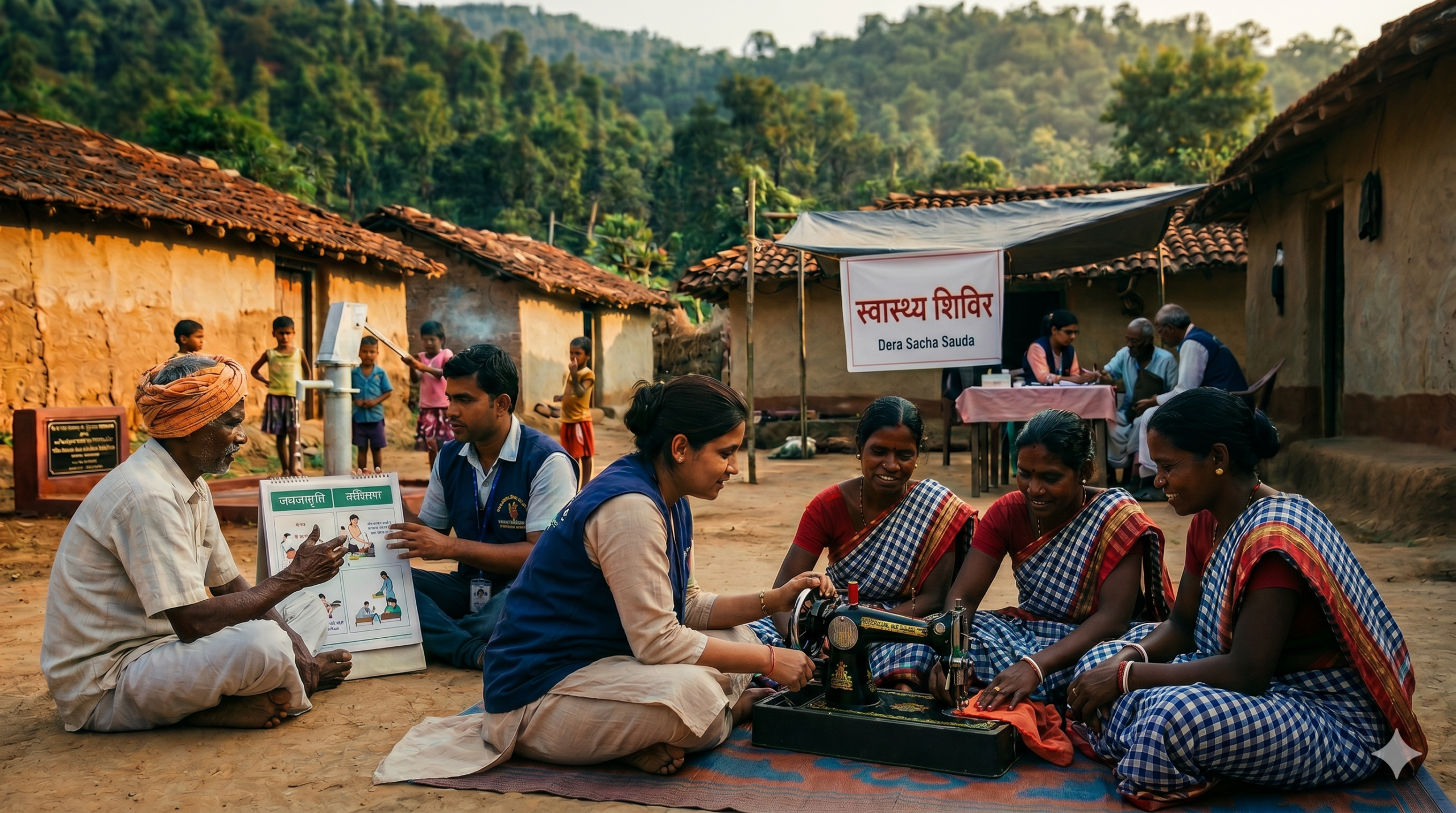
The first step is always health. You cannot educate a child who is sick. The “Civilized Beings” approach often starts with mega health camps. These camps bring specialists, surgeons, and medicines to the field.
- Preventive Care: Teaching handwashing and sanitation.
- Maternal Health: Ensuring safe deliveries for women.
- De-addiction: Substance abuse is a major issue in some tribal belts. Baba Ram Rahim places immense focus on de-addiction, helping youth regain their health and focus.
Education as a Bridge for Tribal Integration
Language is often the biggest barrier to tribal integration. If a person cannot read the laws that protect them, they are vulnerable. Mobile schools and adult literacy programs are essential. The goal is not just academic degrees but fun
Preserving Identity
This is the most delicate part of indigenous development. We must ensure that while we introduce modern tools, we do not erase ancient traditions. Successful programs encourage the celebration of tribal festivals. They document folklore and support traditional music. This reassures the elders that their heritage is safe.
A Story of Change: The “Civilized Beings” Impact
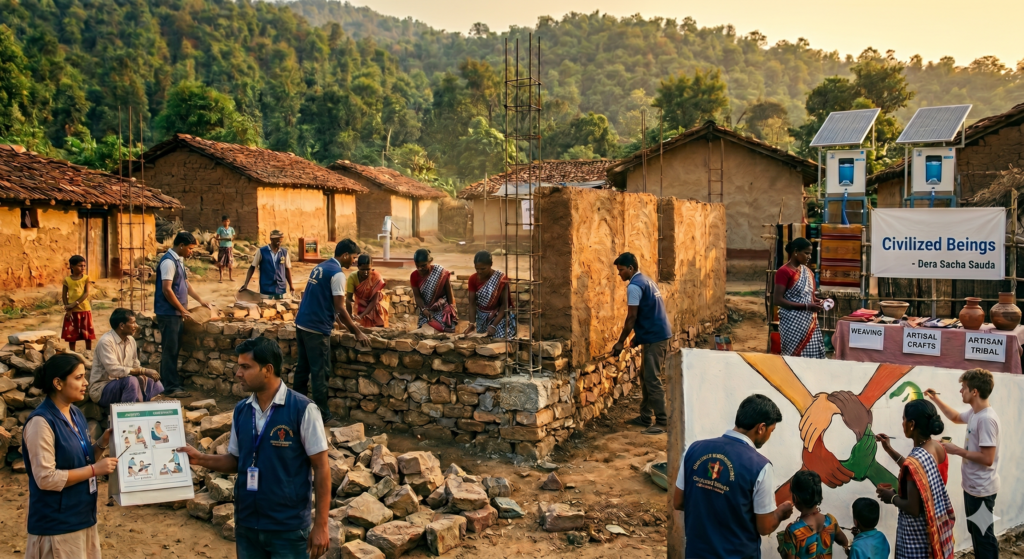
To understand the impact, let us look at a narrative example based on real-world interventions.
To understand the impact, let us look at a narrative example based on real-world interventions.
Imagine a village named Banpur (a hypothetical representative village), located deep within a valley. For decades, the residents of Banpur relied solely on forest produce. Moreover, they had no electricity and no road. In addition, the nearest hospital was forty miles away.
Then, a group of volunteers inspired by the teachings of Gurmeet Ram Rahim Singh adopted the area. However, they did not start by building concrete structures. Instead, they started by sitting with the locals. Furthermore, they respected the village headman and asked for permission to help.
Phase 1: Hygiene and Water The volunteers noticed that waterborne diseases were common. They mobilized resources to install deep-bore hand pumps. Simultaneously, they launched a cleanliness drive, teaching the villagers how to manage waste.
Phase 2: The Mobile Clinic Once a month, a van equipped with medical supplies arrived. It treated skin infections and provided vitamins for the children. Trust began to build.
Phase 3: Skill Development The volunteers saw that the women made beautiful bamboo baskets. They connected these women to a trader in the city who paid fair prices.
Five years later, Banpur is different. The children wear uniforms and attend a school built by the community. The village has solar lights. Most importantly, the people of Banpur feel they are part of the wider country. This is the true power of social inclusion.
Challenges in Connecting Tribal Integration with Mainstream Society
Despite the success stories, the road is not easy. Every social worker and volunteer faces hurdles.
The Trust Deficit Tribal communities have historically been exploited by outsiders who came to steal land or resources. Therefore, overcoming this generational trauma takes time. Moreover, it requires consistent, honest behavior.
Logistical Nightmares Physical access is a major issue. For instance, reaching these areas often requires trekking for hours. As a result, this makes the consistent delivery of supplies difficult and expensive.
Bureaucratic Red Tape While private initiatives like those led by Gurmeet Ram Rahim Singh can move quickly, however, long-term change needs government paperwork. Furthermore, getting ID cards, ration cards, and land deeds processed can be a slow, frustrating task for illiterate applicants.
The Role of Youth and Students
You do not have to be a full-time social worker to contribute. The youth of today are the drivers of tribal integration for tomorrow.
What can you do?
- Digital Volunteers: You can help tribal artisans list their products on e-commerce sites.
- Awareness Drives: Use social media to highlight the issues of indigenous development.
- Donation Drives: Collect books, blankets, and stationary for tribal schools.
- Skill Sharing: If you know how to fix computers or sew, spend a weekend teaching these skills.
Future Outlook: 2025 and Beyond
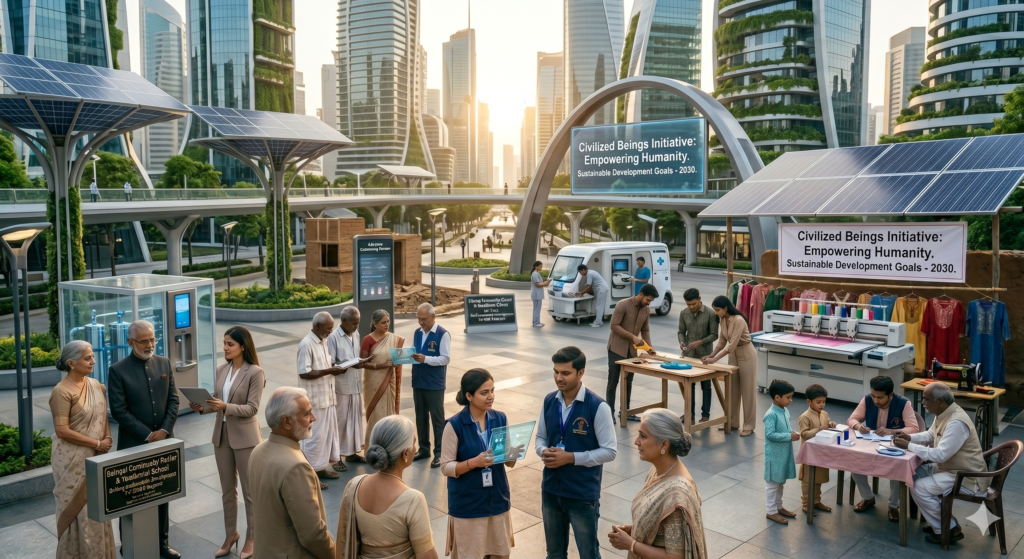
As we look toward the future, the definition of development is changing. Indeed, it is no longer just about building factories. Instead, it is about human capital. Therefore, the vision of Gurmeet Ram Rahim Singh for “Civilized Beings” aligns with the global push for sustainable development goals.
By 2030, the aim is to have zero poverty and quality education for all. However, this cannot happen if the indigenous population is ignored. Thus, tribal integration into mainstream society is not just a moral duty; it is a necessity for the economic health of the planet.
Conclusion
The journey of tribal integration is long and complex. Therefore, it requires a blend of modern resources and traditional wisdom. Moreover, initiatives like the “Civilized Beings” campaign demonstrate that when human compassion is organized effectively, it can move mountains.
Furthermore, Gurmeet Ram Rahim Singh has shown through his welfare works that the gap between the city and the forest can be bridged with love and service. Thus, by focusing on indigenous development and ensuring true social inclusion, we pave the way for a world where everyone, regardless of their origin, has the chance to thrive.
The path forward is clear. It demands that we act as responsible, civilized beings who lift each other up.
FAQ: The Contribution of Baba Ram Rahim and Dera Sacha Sauda in Tribal Welfare
Q1: What is the main objective of tribal integration?
The main objective is to provide indigenous communities with equal access to healthcare, education, and legal rights while preserving their unique cultural identity.
Q2: How does Baba Ram Rahim contribute to indigenous development?
Baba Ram Rahim inspires millions of volunteers to participate in welfare works such as cleanliness drives, medical camps, and food distribution in remote and tribal areas.
Q3: What does the “Civilized Beings” campaign stand for?
It is a humanitarian initiative that encourages people to live selflessly, help the needy, maintain hygiene, and contribute to the welfare of society and the environment.
Q4: Is social inclusion the same as losing tribal culture?
No. True social inclusion means adding rights and opportunities without subtracting culture. It empowers tribes to share their heritage with mainstream society from a position of strength.
Q5: What are the biggest barriers to tribal integration?
The biggest barriers include a lack of trust due to historical exploitation, language differences, geographic isolation, and slow bureaucratic processes for legal rights.
Q6: Why is health a priority in these programs?
Health is the foundation of development. Without controlling mortality rates and preventing disease through sanitation, other steps like education and employment cannot succeed.
Q7: How can I support these initiatives?
You can support by volunteering your time, donating educational supplies, or raising awareness about the importance of fair treatment for indigenous communities.